
Bihar Culture, Cuisine & Heritage
बिहार की कला, संस्कृति और विरासत
Bihar’s art, festivals, languages and heritage sites — the culture portion of Bihar general knowledge, explained simply for BPSC, Bihar Police and other state exams.
Bihar’s art, culture and heritage form a distinct part of the state’s general knowledge — separate from history and geography. Questions on Madhubani painting, Chhath Puja, Bihar’s languages and its UNESCO sites come up regularly in state-level general studies papers, and they are among the easiest marks to secure because the material is finite and factual.
विश्व धरोहर स्थल
छठ पूजा
क्षेत्रीय भाषाएँ
मैथिली
Bihar’s Tradition of Learning ज्ञान की परंपरा
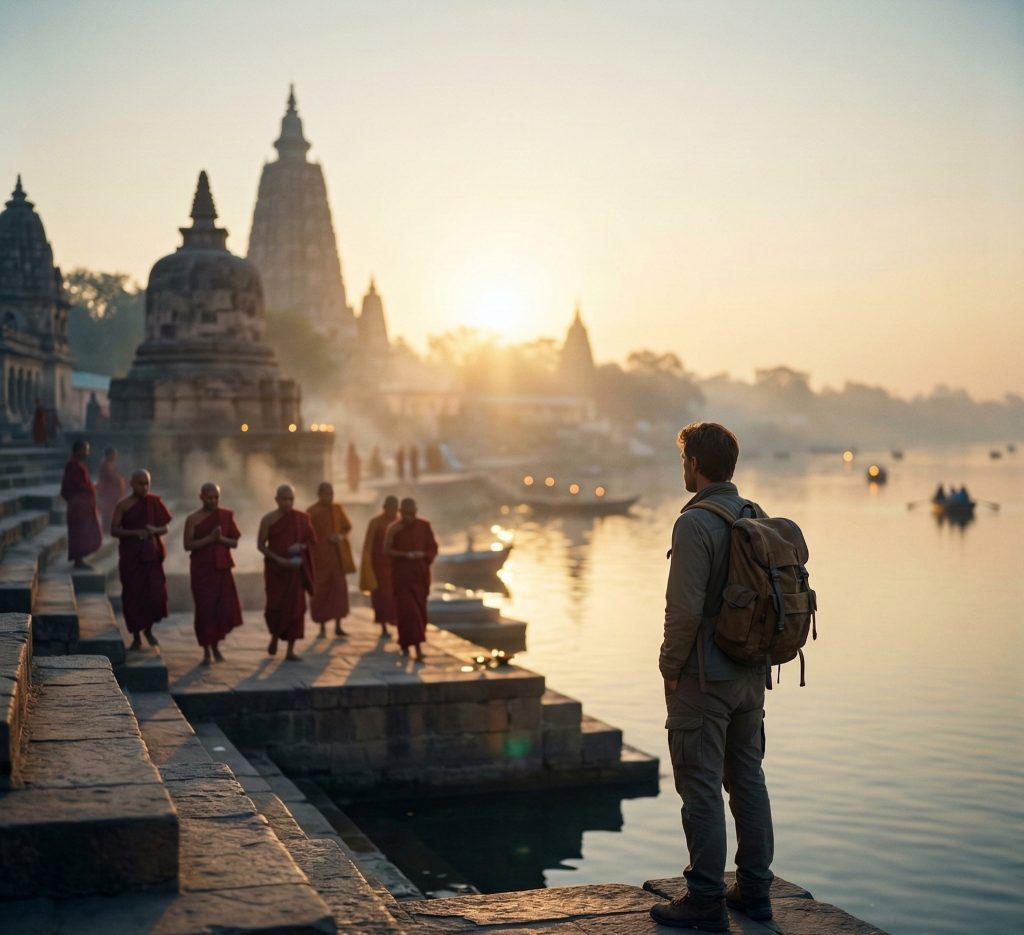
Bihar is often called the land of learning and faith, and the reason is physical: two of the ancient world’s greatest universities stood here, and their ruins survive today.
Nalanda Mahavihara (5th–12th century CE) was one of the world’s first residential universities, teaching Buddhism, philosophy, logic, medicine and astronomy to thousands of students drawn from across Asia. Its excavated brick ruins in Nalanda district are a UNESCO World Heritage Site.
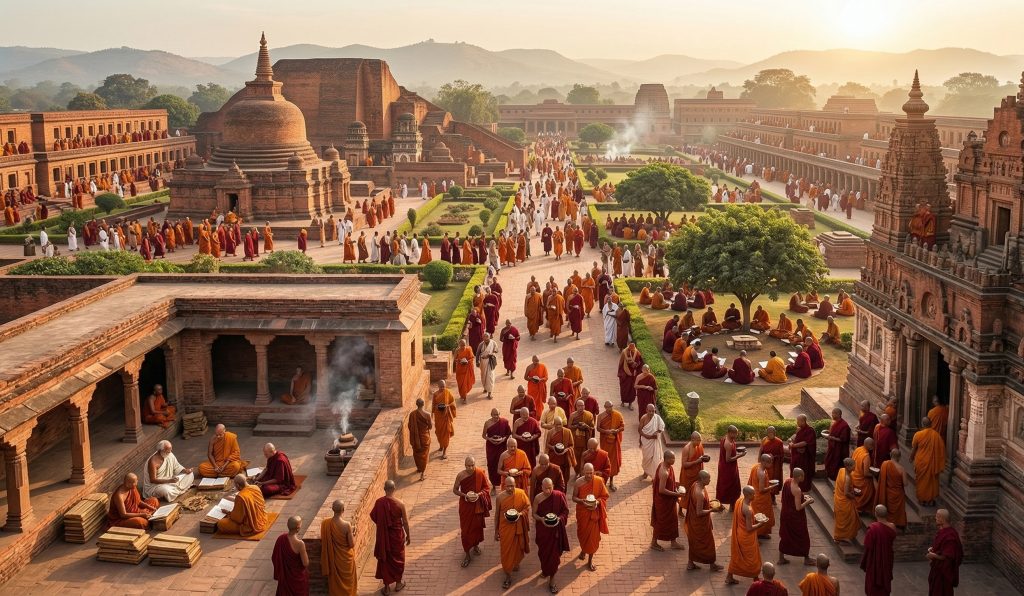
Vikramshila University, near Bhagalpur, was founded by the Pala dynasty and flourished between the 8th and 12th centuries as a major Buddhist monastery-university, second only to Nalanda. Nearby Rajgir and Vaishali were also important centres of learning and sites of the Buddha’s discourses.
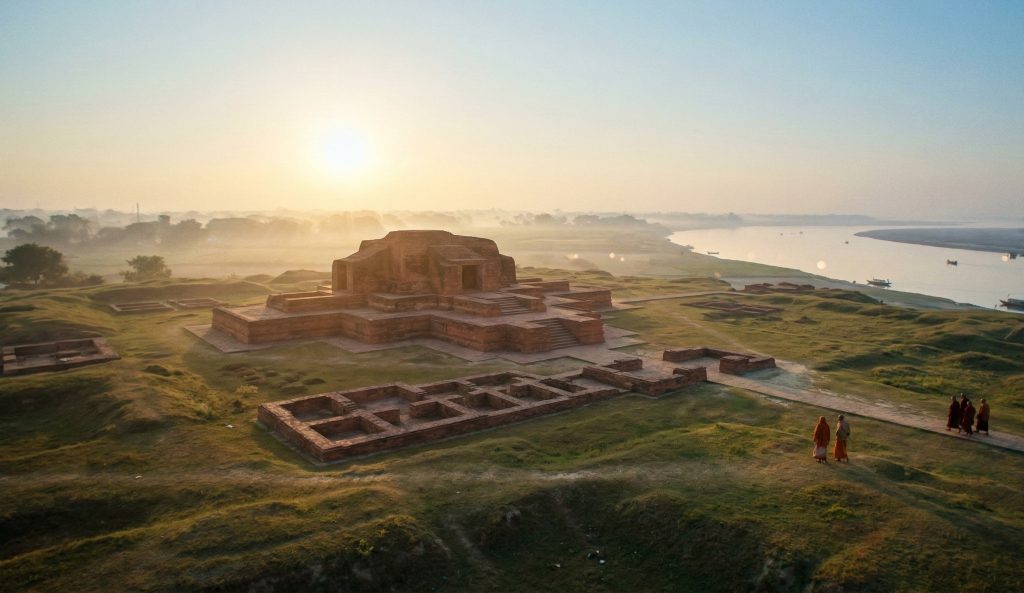
Pair these carefully: Nalanda is in Nalanda district and is a UNESCO site; Vikramshila is near Bhagalpur and was founded by the Pala dynasty. Confusing the two is a common mistake.
Languages of Bihar बिहार की भाषाएँ
Hindi and Urdu are the official languages, but most people grow up speaking one of Bihar’s regional languages. Maithili is the one to remember — it is included in the Eighth Schedule of the Constitution.
| Language | Region spoken | Worth noting |
|---|---|---|
| Maithili मैथिली | Mithila — north Bihar | Eighth Schedule language; rich literary tradition |
| Bhojpuri भोजपुरी | Western Bihar | Large speaker base; strong folk-music and film culture |
| Magahi मगही | Magadha region — Patna, Gaya | Named for the historic Magadha region |
| Angika / Bajjika | Anga (Bhagalpur) / Vaishali belt | Regional tongues of eastern and northern Bihar |
Art and Craft — Madhubani Painting मधुबनी कला
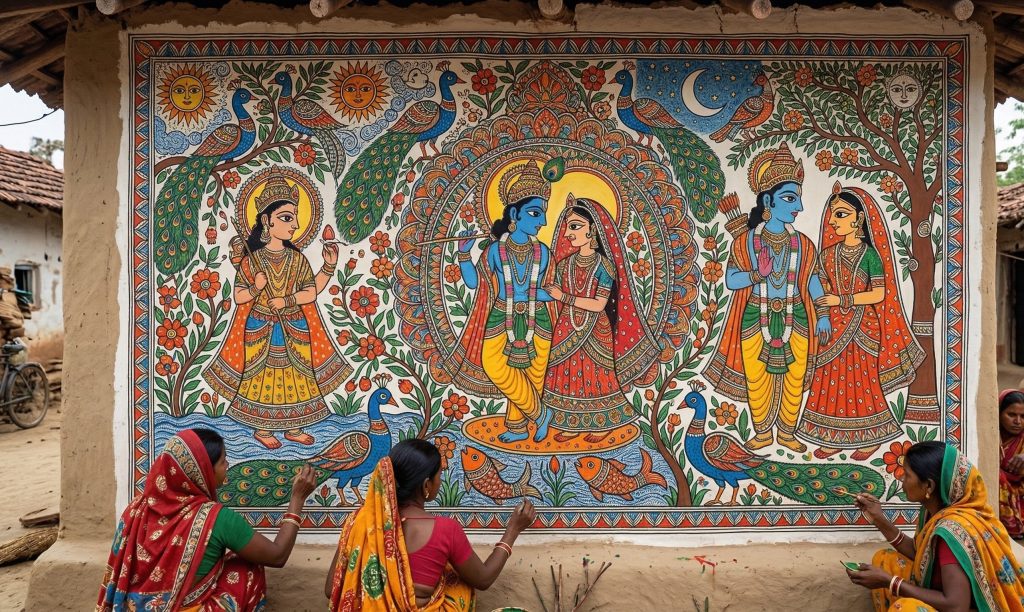
Mithila painting, better known as Madhubani art, is Bihar’s most recognised art form. It originated in the Mithila region of north Bihar and was traditionally practised by women, painted on the walls and floors of homes for weddings and festivals. It is known for intricate geometric patterns, natural dyes and mythological scenes.
Bihar also has a living folk performance tradition. Jat-Jatin and Bidesia are the folk dance forms most often named in exams, alongside songs sung at weddings and at harvest time.
Festivals — Chhath Puja छठ पूजा
Chhath Puja is Bihar’s most distinctive festival and the one most likely to be asked about. It is a four-day festival held after Diwali, dedicated to the Sun God (Surya) and Chhathi Maiya. Devotees fast — traditionally without even water — and stand in rivers at sunrise and sunset to offer prayers.
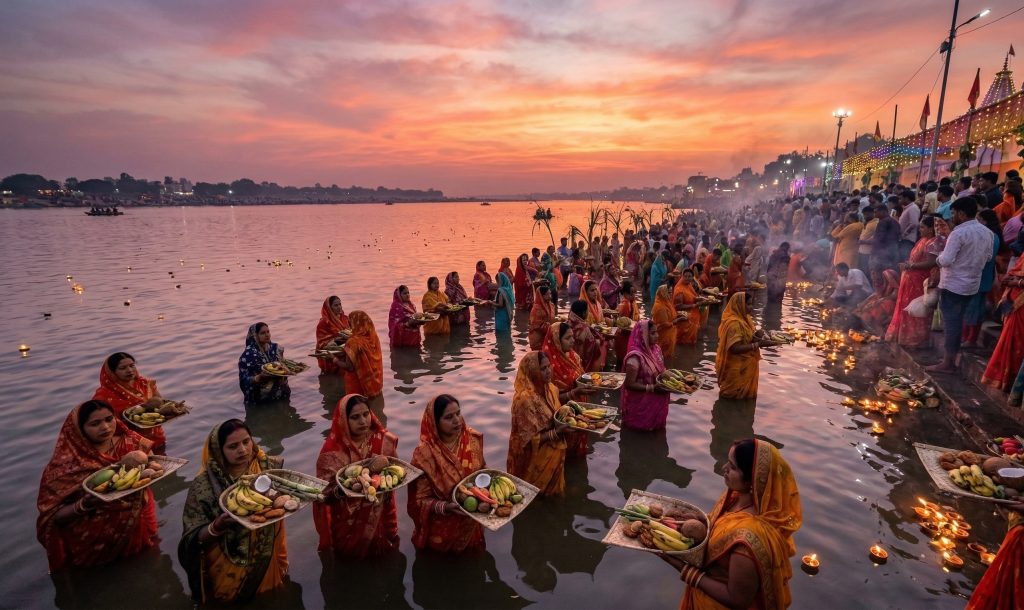
Chhath is four days long, falls after Diwali, and is dedicated to Surya and Chhathi Maiya. Also remember Sonepur Mela — described as Asia’s largest cattle fair — and Buddha Purnima, celebrated at Bodh Gaya.
Cuisine of Bihar बिहार का खानपान
The state’s signature dish is litti-chokha: whole-wheat dough balls stuffed with spiced roasted gram flour (sattu), served with chokha — smoky mashed potato or brinjal. It began as a peasant food that travelled and kept well.
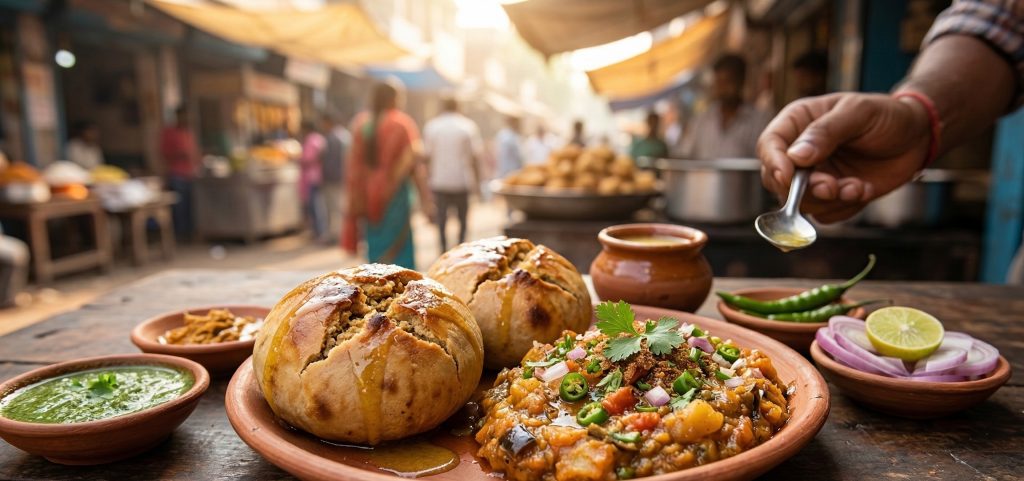
Sattu appears throughout Bihari cooking, in drinks and stuffings alike. Festival sweets are often made without dairy: thekua (wheat-flour and jaggery cookies made for Chhath), plus khaja and anarsa. In rural areas food is still sometimes served on leaf platters called pattal.
Heritage Sites to Know प्रमुख धरोहर स्थल
| Site | Location | Why it matters |
|---|---|---|
| Mahabodhi Temple Complex | Bodh Gaya | UNESCO World Heritage Site. Where the Buddha attained enlightenment; the temple dates to the Gupta era, on a site first marked by Ashoka |
| Nalanda Mahavihara | Nalanda district | UNESCO World Heritage Site. Ruins of the ancient residential university |
| Vikramshila | Near Bhagalpur | Pala-era Buddhist monastery-university |
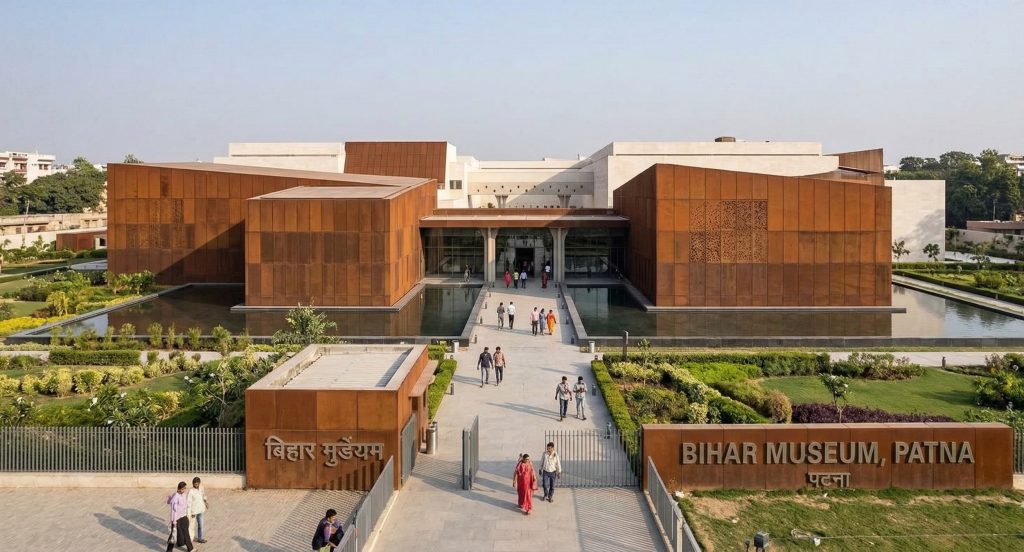
| Bihar Museum | Patna | Modern state museum holding Bihar’s principal archaeological collections |
Quick Culture Quiz छोटा क्विज़
Five questions on what you have just read — a fast check before you move on.
What to Study Next आगे क्या पढ़ें
Culture is one slice of Bihar GK. Here is where to go next — every guide below is free to read:
Frequently Asked Questions अक्सर पूछे जाने वाले सवाल
Two: the Mahabodhi Temple Complex at Bodh Gaya, and the ruins of Nalanda Mahavihara in Nalanda district.
A traditional art form from the Mithila region of north Bihar, historically painted by women on home walls and floors for weddings and festivals. It is known for geometric patterns, natural dyes and mythological subjects, and is also called Mithila painting.
It is Bihar’s most distinctive festival — a four-day observance after Diwali dedicated to the Sun God (Surya) and Chhathi Maiya, in which devotees fast and offer prayers standing in water at sunset and sunrise.
Maithili, spoken mainly in the Mithila region of north Bihar.
This page covers art, culture and heritage. For history, geography and famous personalities, read our complete Bihar GK guide — the two together cover the Bihar-specific general knowledge you are likely to face.
Keep going — it’s all free सब कुछ मुफ़्त
GyanDesk publishes free study notes in Hindi and English for BPSC, SSC, banking and government exams — 316 guides across 10 subjects, no signup.
Browse the Study Library →